
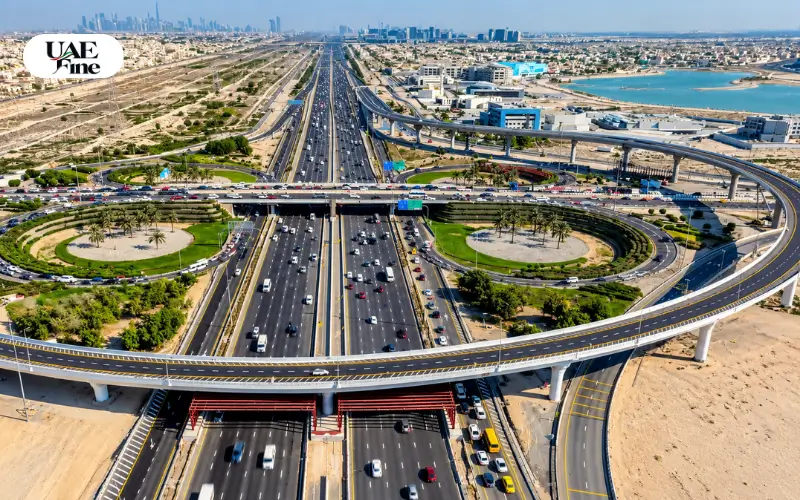
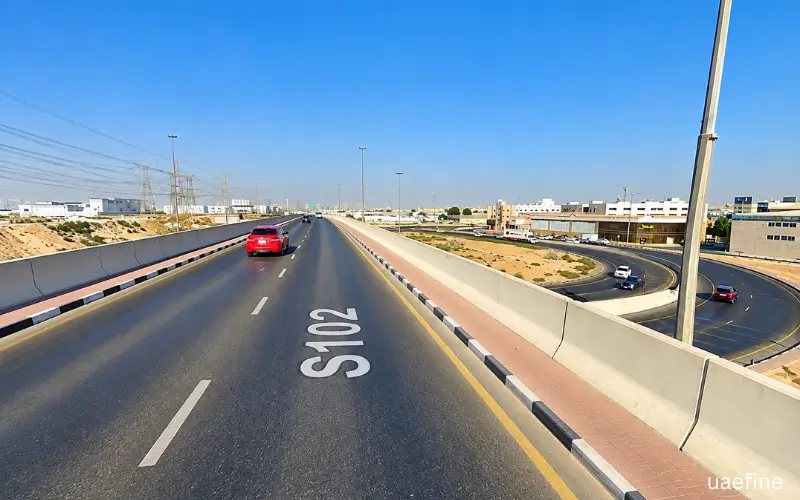
The Sharjah Ring Road, officially known as S102, gives traffic a route around Sharjah’s busy central roads and industrial districts. It connects important parts of the emirate with major highways including Sheikh Mohammed Bin Zayed Road (E311) and Mleiha Road, making it useful for commuters, freight vehicles and drivers travelling between Sharjah, Dubai and the Northern Emirates.
The road network around S102 continues to change in 2026. New bridges, road upgrades and the Al Taawun Tunnel project are changing traffic patterns around several important junctions. If you use the Ring Road regularly, knowing its main connections and current construction areas can make daily travel easier.
What Is Sharjah Ring Road?
Sharjah Ring Road is a major arterial road identified by the route number S102. It runs through the emirate’s industrial belt and connects with several major roads that carry traffic towards Dubai and other parts of Sharjah.
The road plays an important role because drivers can use it to move around the city rather than relying only on central routes such as Al Ittihad Road. Industrial areas along and around the corridor also generate considerable commercial and heavy-vehicle traffic.
The Ring Road does not function as one isolated road. Instead, it forms part of a wider network linking industrial districts, Mleiha Road, Sheikh Mohammed Bin Zayed Road and other major corridors.
That network makes S102 particularly relevant to people travelling between Sharjah’s industrial areas and the highways leading towards Dubai, Ajman and the Northern Emirates.
Where Is Sharjah Ring Road Located?
The Ring Road runs through Sharjah’s industrial belt, including the areas around Industrial Areas 15, 16 and 17 identified in the available road research. It also connects with roads serving University City and the wider eastern side of Sharjah.
One of its most important functions comes from its connection with Sheikh Mohammed Bin Zayed Road (E311). This connection gives drivers access to one of the UAE’s main north-south highway corridors.
Mleiha Road also plays an important role around the eastern side of the Ring Road. Drivers using the University City and industrial-area network often move between S102 and Mleiha Road depending on their destination.
The road’s position means traffic conditions can change quickly when work takes place on nearby highways or junctions. A closure on an adjoining corridor can push additional traffic towards the Ring Road even when S102 itself remains open.
Which Areas Are Connected to the Ring Road?
S102 serves several industrial and commercial parts of Sharjah rather than one residential neighbourhood. The road network around it connects with areas including:
- Industrial Area 15
- Industrial Area 16
- Industrial Area 17
- University City
- Nearby industrial districts
- Areas connected through Mleiha Road
- Routes leading towards Sheikh Mohammed Bin Zayed Road
The exact route a driver should take depends on the destination. A person travelling to an industrial warehouse may use a different junction from someone heading towards Dubai or University City.
This matters because the Ring Road works best as part of a network. Drivers should check the junction and exit they need rather than assuming that staying on S102 for the entire journey will provide the fastest route.
How Does Sharjah Ring Road Connect to E311?
The connection between S102 and Sheikh Mohammed Bin Zayed Road (E311) is one of the road’s most useful features.
E311 carries long-distance traffic between Dubai, Sharjah and the Northern Emirates. By connecting the Ring Road with E311, Sharjah gives industrial and commuter traffic a route towards the wider highway system without forcing every journey through central urban roads.
SRTA completed a Ring Road improvement project in 2023 that increased capacity towards Sheikh Mohammed Bin Zayed Road. The project added a 1.10-kilometre lane from the Nahda exit towards Dubai and another 1.70-kilometre lane towards the Sheikh Mohammed Bin Zayed Road exit. SRTA said the upgraded sections reached four lanes and aimed to improve traffic flow and reduce peak-hour congestion.
The improvement also shows why S102 remains important beyond its role as an industrial-area road. Its connections with the major highway network allow traffic to move between different parts of Sharjah without relying on a single central corridor.
What Is the History of Sharjah Ring Road?
Sharjah developed the Ring Road to address long-standing congestion and improve movement around the emirate. The original project covered several phases and carried an estimated cost of about Dh630 million, with the first phase opening in June 2005.
The road continued to expand after its original construction.
In 2016, a 3-kilometre, two-lane section opened as part of an approximately Dh49 million project connecting the Ring Road towards Sheikh Mohammed Bin Zayed Road. Another 2-kilometre section followed as part of a wider project around the Emirates Road–Mleiha Road interchange.
SRTA later continued upgrading the corridor. The 2023 project increased lane capacity on sections heading towards Sheikh Mohammed Bin Zayed Road and improved the links between the Ring Road, Dubai-bound traffic and E311.
The history of S102 explains why the road looks different across different sections. It developed over time as Sharjah added new connections and increased capacity around areas experiencing higher traffic demand.
What Is Happening on Sharjah Ring Road in 2026?
Several major road projects are affecting the wider network around Sharjah Ring Road in 2026. The most important one for drivers travelling towards Dubai is the Al Taawun Tunnel project, while other upgrades are changing connections around University City and the industrial areas.
SRTA announced in September 2026 that the first phase of the Al Taawun Tunnel project and its associated roads should finish ahead of the Sharjah International Book Fair in November. The first phase includes roads connecting the tunnel area towards Sheikh Mohammed Bin Zayed Road and Emirates Road.
A wider Dh750 million road programme also covers several major projects across the network, including the Al Taawun Tunnel, upgrades at Al Khulafa Al Rashideen intersection, new bridges around Industrial Streets 1 and 2, improvements around Industrial Street 3 and work at the Sheikh Mohammed Bin Zayed Road interchange.
These projects do not all sit directly on S102, but they affect traffic entering and leaving the Ring Road network.
Al Taawun Tunnel
The Al Taawun Tunnel is one of the largest current projects affecting traffic between Sharjah and Dubai.
The planned tunnel runs beneath Al Taawun Roundabout and will carry three lanes in each direction. The wider project also includes associated roads and connections towards major highways.
SRTA confirmed that construction was progressing in September 2026 and that the first phase should finish before the November 2026 Sharjah International Book Fair.
Temporary traffic changes already affect Al Taawun Street. SRTA introduced diversions from June 13, 2026, with Dubai-bound traffic and traffic heading towards Al Nahda Bridge using alternative routes during construction.
For Ring Road users, the important point is that traffic conditions around the wider Sharjah–Dubai network can change even when S102 itself has no full closure.
Ring Road Upgrade Near the Etihad Rail Station
Sharjah also approved a Dh90 million project to upgrade a 5-kilometre stretch of the Ring Road near the Etihad Rail station.
The project includes an expansion of University City Bridge to four lanes, with two lanes in each direction. Authorities announced the project as part of wider efforts to improve movement around Mleiha Road and the surrounding road network.
This section matters to drivers using the Ring Road around University City because bridge and junction changes can affect the routes available between industrial districts and eastern Sharjah.
Why Does Traffic Build Up Around the Ring Road?
S102 carries a mixture of commuter traffic, commercial vehicles and traffic moving between major highways. That combination can make certain junctions slower during busy periods.
Traffic can also increase when nearby roads face accidents, construction or temporary diversions. A problem on E311, Mleiha Road, or another connecting corridor can send additional vehicles towards S102.
Recent traffic reporting has identified slow movement on Maliha Road and the approaches to University City during periods of heavy Dubai–Sharjah congestion.
Construction creates another variable in 2026. Drivers may encounter temporary diversions, lane changes, and altered access around major project areas, particularly near Al Taawun.
Is Sharjah Ring Road Busy During Peak Hours?
Yes, traffic can become heavy during the main commuter periods, particularly when Dubai-bound and Sharjah-bound traffic reaches the major connecting roads. The evening commute can be particularly difficult because large numbers of workers leave Dubai for Sharjah and continue towards residential and industrial areas.
Morning congestion can also affect the network in the opposite direction. The exact delay changes from one day to another because accidents, construction activity and traffic diversions can quickly change road conditions.
For this reason, a normal travel time on S102 should not be treated as a fixed journey time. Live navigation information remains more useful when you need to know the conditions for a specific trip.
Are There Closures on Sharjah Ring Road?
Road closures around Sharjah change according to construction schedules, maintenance, and traffic incidents. Drivers should therefore avoid relying on an old closure notice as a current update.
The Al Taawun area currently has temporary traffic changes linked to tunnel construction. SRTA announced a partial closure and diversion on Al Taawun Street in June 2026 and provided alternative routes for affected traffic.
University City and the University Bridge area have also experienced road works connected with wider infrastructure development. The Ring Road upgrade near the Etihad Rail station forms part of this changing network.
A separate Emirates Road overnight closure ran from September 11 to September 18, 2026, for Etihad Rail-related work. That closure has now ended and should not be treated as a current Ring Road closure.
The safest approach is to check the latest SRTA traffic announcement before travelling if your journey passes through an active construction zone.
Which Roads Connect With Sharjah Ring Road?
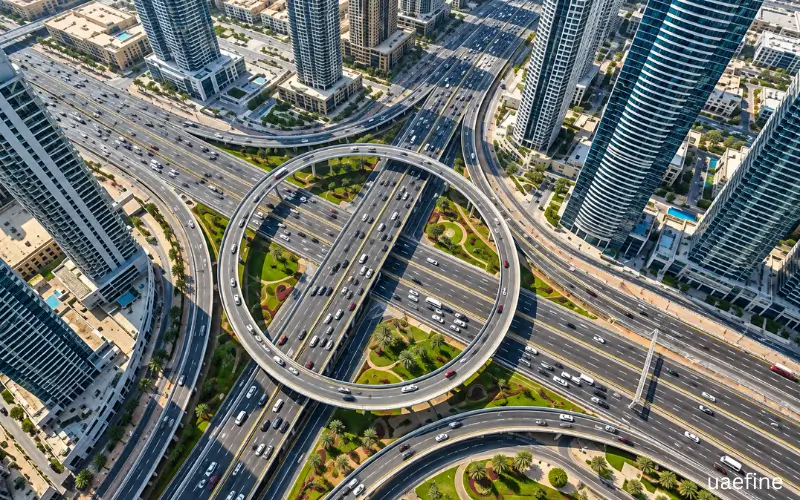
S102 connects with several important roads around Sharjah. The most relevant connections for everyday drivers include:
Sheikh Mohammed Bin Zayed Road (E311):
This provides access to the wider Dubai, Sharjah,h and Northern Emirates highway network.
Mleiha Road:
This connection serves University City and the eastern side of Sharjah while also linking into the wider industrial road system.
Al Taawun corridor:
Traffic from the Ring Road network can interact with routes towards Al Taawun, Al Nahda and Dubai. Construction around Al Taawun is changing some movements in 2026.
Emirates Road:
The wider network around S102 connects with Emirates Road, giving drivers another route towards Dubai and the Northern Emirates.
Industrial roads:
Several local industrial roads connect the Ring Road with warehouses, factories, workshops and other commercial properties.
Because these roads serve different purposes, the best connection depends on where you start and where you want to finish.
Can You Use Sharjah Ring Road to Reach Dubai?
Yes. S102 connects with roads that lead towards Dubai, including Sheikh Mohammed Bin Zayed Road and routes around Al Nahda.
The Ring Road can therefore form part of a Dubai–Sharjah commute, especially for drivers travelling from industrial and eastern parts of Sharjah towards Dubai.
However, the fastest route changes with traffic. A route that works well in the afternoon may slow down during the evening commute, particularly when construction or an accident affects one of the connecting roads.
The Al Taawun project also means drivers should check current diversions before using routes towards Al Nahda Bridge and Dubai. SRTA has specifically introduced temporary diversions around the Al Taawun construction zone.
Does Sharjah Ring Road Have Salik?
The Sharjah Ring Road itself does not have a Salik toll gate.
However, a journey that uses S102 can continue onto roads in Dubai where toll charges may apply. The presence of S102 does not automatically mean that the entire journey will remain toll-free.
Drivers should therefore check the full route rather than only the starting road when comparing travel options.
Which Areas Benefit From Sharjah Ring Road?
The road mainly benefits industrial, commercial and commuter traffic around the northern and eastern parts of Sharjah.
Industrial districts use the road for access to warehouses, factories,ies and commercial facilities. Commuters use its connections to reach major highways and residential districts.
University City also matters because the Ring Road and Mleiha Road network provide access to this part of Sharjah. The planned and ongoing road improvements around University City aim to increase capacity and improve movement through this section of the network.
The road therefore serves more than one type of journey. It supports local industrial movement while also carrying longer trips between Sharjah and surrounding emirates.
What Should Drivers Expect in 2026?
Drivers should expect a road network that continues to change throughout the year.
The biggest factor is the number of projects happening at the same time. Al Taawun Tunnel construction affects routes towards Dubai, while Ring Road and University City improvements affect movement around the eastern side of Sharjah.
Temporary signs and diversions may change the route you normally use. A familiar turn or lane may not remain available during construction, so drivers should follow the latest road signs instead of relying entirely on memory.
The first phase of the Al Taawun Tunnel project is scheduled for completion before the November 2026 Sharjah International Book Fair, but the wider road programme extends beyond that first opening.
Practical Tips for Using Sharjah Ring Road
A few simple habits can make regular trips easier:
- Check live traffic before leaving, especially during peak commuting hours.
- Check SRTA announcements if your route passes Al Taawun, University City, or an active construction area.
- Keep an alternative route through Mleiha Road, E311, or another suitable connecting corridor.
- Follow temporary signs rather than assuming your usual lane or exit remains open.
- Allow additional travel time when major events or construction affect nearby roads.
- Check the complete route if you want to avoid toll roads, rather than assuming every road in the journey is toll-free.
These steps matter more during periods of major construction because traffic patterns can change without much notice.
Sharjah Ring Road Map and Route
A map is useful because S102 forms part of a much larger road network rather than following a simple point-to-point route.
For navigation, look for the S102 designation and then identify the junction closest to your destination. Drivers heading towards E311 should pay attention to the relevant highway connection, while those travelling towards University City should check the Mleiha Road side of the network.
The Ring Road also passes close to several industrial areas, so warehouse and commercial addresses often use nearby industrial roads rather than the Ring Road itself as their final access point.
For a live journey, navigation apps provide the most useful route information because they can reflect current congestion, accidents, and temporary road restrictions.
Final Takeaway
Sharjah Ring Road, or S102, has grown from a major traffic-relief project into an important part of Sharjah’s wider road network. Its connections with E311, Mleiha Road and the industrial districts make it useful for both daily commuters and commercial traffic.
The road network around S102 is still changing in 2026. The Al Taawun Tunnel, University City bridge work, and other major road projects will alter traffic patterns as construction progresses.
For drivers, the key point is simple: use S102 as part of the wider Sharjah road network, check the latest traffic conditions before travelling, and pay particular attention to temporary diversions around active construction areas.
Also Explore: Sharjah Muroor
Frequently Asked Questions
What is S102 in Sharjah?
S102 is the official route number for Sharjah Ring Road.
Where is Sharjah Ring Road?
It runs through Sharjah’s industrial belt and connects with major roads including E311 and Mleiha Road.
Does Sharjah Ring Road connect to E311?
Yes. S102 connects with Sheikh Mohammed Bin Zayed Road (E311).
Is Sharjah Ring Road toll-free?
Yes. S102 itself does not have a Salik toll gate.
Can I use Sharjah Ring Road to reach Dubai?
Yes. Its connections with E311 and other roads provide routes towards Dubai.
Is Sharjah Ring Road currently under construction?
Some sections and nearby corridors remain affected by road projects in 2026. Check the latest SRTA notices before travelling.
What is being built at Al Taawun?
SRTA is developing a major tunnel and associated roads to improve traffic movement towards Dubai and major highways.
When will the first phase of Al Taawun Tunnel finish?
SRTA expects the first phase to finish ahead of the Sharjah International Book Fair in November 2026.
Does the Ring Road pass through Industrial Area 17?
Yes. Industrial Area 17 sits within the wider Ring Road and industrial road network.
Is Mleiha Road connected to Sharjah Ring Road?
Yes. Mleiha Road forms an important connection within the Ring Road network.
Is University City near Sharjah Ring Road?
Yes. The Ring Road and Mleiha Road connect to the University City area.
