
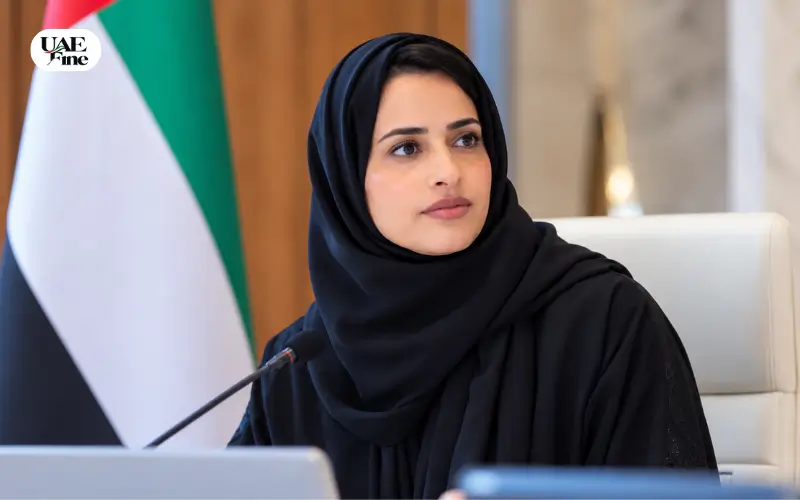
Sarah bint Yousef Al Amiri is the United Arab Emirates’ Minister of Education. She took on the role in July 2024 after working in computer engineering, advanced technology and the country’s space programme, including the Emirates Mars Mission and its Hope Probe spacecraft.
Her responsibilities now centre on education policy and school outcomes. In 2026, the Ministry of Education has placed attention on teacher development, artificial intelligence (AI), future skills and the National Education Charter.
Quick Facts
| Detail | Information |
| Full name | Sarah bint Yousef Al Amiri |
| Nationality | Emirati |
| Current position | UAE Minister of Education |
| Appointed | July 2024 |
| Academic qualifications | Bachelor’s and master’s degrees in computer engineering |
| University | American University of Sharjah |
| Known for | Science, advanced technology and the Hope Probe |
| Current policy priorities | Education quality, teacher development and AI skills |
| Previous space-sector role | Chairperson of the UAE Space Agency |
| Official profile | UAE Cabinet |
The UAE Cabinet confirms Al Amiri’s appointment and current ministerial role. Her official government biography also lists her university education and qualifications.
Who Is Sarah Al Amiri?
Al Amiri is an Emirati public-sector leader whose career has included computer engineering, advanced technology, space science, and education. She became widely known through her senior role in the Emirates Mars Mission, which sent the Hope Probe into orbit around Mars in February 2021.
The mission drew international attention to the UAE’s space programme. It also brought together engineers, researchers, government bodies and international partners to deliver a technically complex scientific project.
A Cabinet reshuffle in July 2024 appointed Al Amiri as Minister of Education. Her work now concerns policies that affect schools, teachers and student outcomes.
Her move from space-sector leadership to education links two areas of national development. Space programmes depend on skilled researchers and engineers, while schools help students build the knowledge and abilities they may later use in scientific and technical careers.
Education and Academic Qualifications
Al Amiri studied computer engineering at the American University of Sharjah and earned both bachelor’s and master’s degrees. Her technical education gave her a foundation for work involving computing systems, engineering and advanced technology.
Computer engineering brings together hardware, software and the systems that connect them. These areas support scientific programmes, including space missions that rely on data processing, instrument design and dependable computing infrastructure.
An engineering degree does not cover every part of public leadership. Large national programmes also require planning, communication, coordination and decisions about resources. Al Amiri’s academic background is one part of her career, alongside her later work in science and government.
Career Before Becoming Education Minister
Before taking charge of the education portfolio, Al Amiri worked across science, technology and national research. Her career developed during a period when the UAE was investing in technical expertise and expanding its scientific programmes.
Three stages help explain her professional path: work in advanced technology, leadership connected with the space sector, and her appointment as Minister of Education.
Advanced technology and scientific development
Al Amiri became a public representative of the UAE’s investment in science and advanced technology. Her work formed part of a wider effort to build local expertise in emerging fields and strengthen the country’s research capabilities.
The Emirates Mars Mission became a prominent part of that effort. A project of this scale requires engineers, researchers, government institutions and international partners to coordinate around demanding technical and scientific goals.
The mission also gave specialists based in the UAE opportunities to work with international researchers and contribute to planetary science. Projects like this can build local experience and support later work in science and engineering.
Leadership at the UAE Space Agency
Al Amiri previously served as chairperson of the UAE Space Agency. Her tenure coincided with the country’s expanding work in space science, planetary exploration and satellite-related programmes.
She no longer holds that position. After the July 2024 Cabinet changes, Ahmad Belhoul Al Falasi became chairman of the agency’s board, while Al Amiri moved to the education portfolio.
The distinction matters when reading older biographies and news reports. Articles published before the reshuffle may still use her former title, so check the publication date before treating it as current.
The Hope Probe and UAE Mars Mission
The Hope Probe is one of the projects most closely associated with Al Amiri’s scientific career. The spacecraft launched in July 2020 and entered orbit around Mars on 9 February 2021 as part of the Emirates Mars Mission.
The mission was designed to study the Martian atmosphere and track how it changes over time. It became the first Arab and Islamic mission to explore another planet and made the UAE the fifth country to reach Mars orbit successfully.
Al Amiri held a senior leadership role in the programme and helped communicate its scientific and national significance. The spacecraft’s achievements, however, resulted from the combined work of scientists, engineers, technicians and research partners.
What did the Hope Probe discover?
The mission has supplied researchers with data on Mars’s atmosphere, auroras and Deimos, one of the planet’s two moons.
According to the UAE Space Agency’s July 2026 mission update, key achievements include:
- Observations of previously unknown types of Martian auroras, including sinuous discrete auroras and patchy proton auroras.
- Detailed observations of Deimos that help researchers examine the moon’s composition, structure, and possible origin.
- More than 10 terabytes of scientific data made openly available to the international research community.
- Findings that have supported peer-reviewed papers and collaboration among researchers.
In February 2026, the UAE announced a three-year extension of the mission through 2028. The extension allows the spacecraft to continue collecting atmospheric data and tracking seasonal changes on Mars.
These observations help scientists study how the Martian atmosphere behaves and interacts with the solar wind. They also add to research into the planet’s climate and long-term evolution.
The mission has value beyond its scientific findings. It gives researchers experience in analysing complex datasets, using advanced instruments and working with colleagues in other countries. In July 2026, the UAE Space Agency reported that more than 200 international research institutions and universities had benefited from the mission’s datasets.
Did Al Amiri personally make the Hope Probe discoveries?
The Hope Probe’s scientific findings come from the mission’s research teams, rather than from one individual. Al Amiri held a senior leadership role, but that does not mean she personally carried out every observation or analysis.
The UAE Space Agency identifies scientific team members, including Hessa Al Matroushi, in connection with the mission’s research. Where official records identify the researchers behind a finding, credit should go to those individuals and teams.
Sarah Al Amiri as UAE Minister of Education
Al Amiri became Minister of Education in July 2024, moving from space and advanced technology leadership to responsibility for the country’s education system.
The Ministry of Education develops policies on curriculum, teacher preparation, student assessment, and school performance. Its work also covers how schools prepare students for further study and employment.
Technology is an important part of that agenda. Schools need to help students use digital tools responsibly, and teachers need practical training and support to bring new approaches into the classroom.
Her title is different from that of Minister of Higher Education and Scientific Research. The UAE Cabinet lists Abdulrahman Al Awar as acting Minister of Higher Education and Scientific Research, alongside his other responsibilities.
National Education Charter
The National Education Charter was signed on 28 February 2026 by UAE President Sheikh Mohamed bin Zayed Al Nahyan and the Rulers of the Emirates. It sets out a national vision for education and describes the qualities and abilities the country wants students to develop.
The charter has three main pillars:
| Pillar | Main emphasis |
| National identity | Language, values, belonging and cultural understanding |
| Character traits | Discipline, teamwork, confidence and lifelong learning |
| Future skills | Critical thinking, communication, creativity, literacy, numeracy and AI mastery |
The charter presents education as a shared responsibility for schools, families and the wider community. It also connects classroom learning with the knowledge, skills and values students need as they progress through school and into working life.
In August 2026, the Ministry launched its back-to-school campaign under the theme Guided by the Charter, Building Tomorrow. The campaign promotes the charter through school activities, teacher support and family involvement.
Signing a charter sets a direction; it does not, by itself, prove that student outcomes have improved. Its effect will depend on how schools apply its principles, the support teachers receive and the way the Ministry measures progress.
Artificial intelligence in education
AI is another focus of the Ministry’s work. On 20 May 2026, the Ministry of Education and Hamdan Bin Mohammed Smart University launched the National AI Upskilling Programme for Teachers.
The programme aims to help teachers use AI tools effectively and responsibly. Its practical applications include lesson planning, assessment and classroom activities, while teachers remain responsible for guiding students and evaluating their work.
In August 2026, the Ministry also reported a Specialised Training Week attended by more than 24,000 school leaders, teachers, advisers and support staff. Sessions covered AI integration, inclusive education, data-driven assessment, support for gifted students and professional leadership.
Introducing AI in schools involves more than giving teachers access to software. They need to judge whether a tool fits a task, check its output for errors, and ensure it supports learning rather than replacing independent thought.
Students also need AI literacy alongside subject knowledge, communication, and critical thinking. Digital tools can explain ideas and support classroom activities, but teachers remain essential for spotting gaps in understanding and providing individual guidance.
Recent Developments in 2026
Several announcements in 2026 illustrate the Ministry of Education’s priorities.
| Date | Development | Why it matters |
| 28 February 2026 | National Education Charter signed | Sets a shared direction for UAE education |
| 20 May 2026 | National AI Upskilling Programme for Teachers launched | Supports responsible use of AI in teaching |
| 22 August 2026 | Specialised Training Week reported | Develops skills among education staff |
| 27 August 2026 | Back-to-school campaign launched | Promotes the National Education Charter |
| 8 September 2026 | UAE PISA 2025 results reported | Highlights reading, mathematics and science performance |
| 16 September 2026 | Participation in GCC education ministers’ meeting reported | Supports regional cooperation on education |
These developments cover student performance, teacher training, national identity and digital skills.
On 8 September 2026, the Ministry reported that the UAE ranked first among participating Arab countries in reading, mathematics and science in PISA 2025. This result compares the UAE with participating Arab countries in that assessment; it does not mean the country ranked first worldwide across every education measure.
The longer-term effects of these policies will depend on implementation and evidence from schools. Future assessments can help show whether teacher training, curriculum changes and technology programmes lead to measurable gains in student learning.
Leadership Approach and Public Impact
Al Amiri’s career spans two fields with different responsibilities. The Hope Probe required scientific research, engineering, international cooperation and clear mission goals. Education policy involves coordination across schools, support for teachers and sustained attention to student progress.
Both fields depend on planning, specialist knowledge, teamwork and measurable results. Space teams assess spacecraft performance, scientific observations and research output. Education teams examine student achievement, teaching quality, access to learning and the effects of policy changes.
Her move into education brings her technical background into a role that helps prepare people for the future workforce. The two sectors are not interchangeable, however; each has its own challenges and ways of measuring success.
Students interested in engineering, AI or scientific research need strong foundations in mathematics, literacy and critical thinking. Schools help build these skills, while families, universities, employers and public institutions also influence the opportunities available to young people.
Conclusion
Al Amiri’s career has moved from computer engineering and advanced technology to leadership in space exploration and education. Her role in the Hope Probe programme helped bring international attention to the UAE’s Mars mission. As Minister of Education, she now works on policies that affect schools and student outcomes.
The National Education Charter, teacher development and responsible AI use are prominent parts of the Ministry’s 2026 agenda. Their long-term value will depend on how schools put these policies into practice and whether students develop stronger knowledge and skills as a result.
Her career is best understood by distinguishing her former space-sector position from her current ministerial role and recognising the wider teams responsible for the Hope Probe’s scientific achievements.
Also Explore: Dr. Saniya Habboub
Frequently Asked Questions
1. Who is Sarah Al Amiri?
Sarah Al Amiri is an Emirati government leader and the UAE Minister of Education. She is also known for her work in advanced technology and her senior role in the Emirates Mars Mission.
2. What is Sarah Al Amiri’s current position?
As of October 2026, she serves as the UAE Minister of Education. The UAE Cabinet confirms that she took up the role in July 2024.
3. What is Sarah Al Amiri’s educational qualification?
She holds bachelor’s and master’s degrees in computer engineering from the American University of Sharjah, according to her official government biography.
4. Was Sarah Al Amiri the chairperson of the UAE Space Agency?
Yes. She previously served as chairperson. Ahmad Belhoul Al Falasi became chairman of the agency’s board after the July 2024 Cabinet changes.
5. What is Sarah Al Amiri known for?
She is known for her work in advanced technology, her leadership role in the Emirates Mars Mission,n and her current responsibilities in UAE education policy.
6. What is the Hope Probe?
The Hope Probe is the spacecraft used for the Emirates Mars Mission. It entered Mars orbit on 9 February 2021 and studies the planet’s atmosphere and related phenomena.
7. Did Sarah Al Amiri discover auroras on Mars?
The Hope Probe mission observed previously unknown forms of Martian auroras. These findings came from the mission’s scientific work and should not be credited to one person unless the scientific record supports that attribution.
8. Is Sarah Al Amiri the UAE Minister of Higher Education?
No. Her current title is Minister of Education. The UAE Cabinet lists Abdulrahman Al Awar as acting Minister of Higher Education and Scientific Research.
9. What is the National Education Charter?
Signed on 28 February 2026, the charter sets out the UAE’s national education framework. Its priorities include national identity, character development and future skills such as critical thinking and AI mastery.
10. What is the UAE doing to introduce AI into education?
The Ministry of Education and Hamdan Bin Mohammed Smart University launched a teacher AI upskilling programme in May 2026. It aims to help teachers use AI in lesson planning,assessmente,nt and classroom practice while keeping teachers central to student learning.
11. Is Sarah Al Amiri still chairperson of the UAE Space Agency in 2026?
No. She moved to the education portfolio in July 2024. Ahmad Belhoul Al Falasi became chairman of the UAE Space Agency’s board.
12. Where did Sarah Al Amiri study?
She studied at the American University of Sharjah, where she earned bachelor’s and master’s degrees in computer engineering.
